Introduction
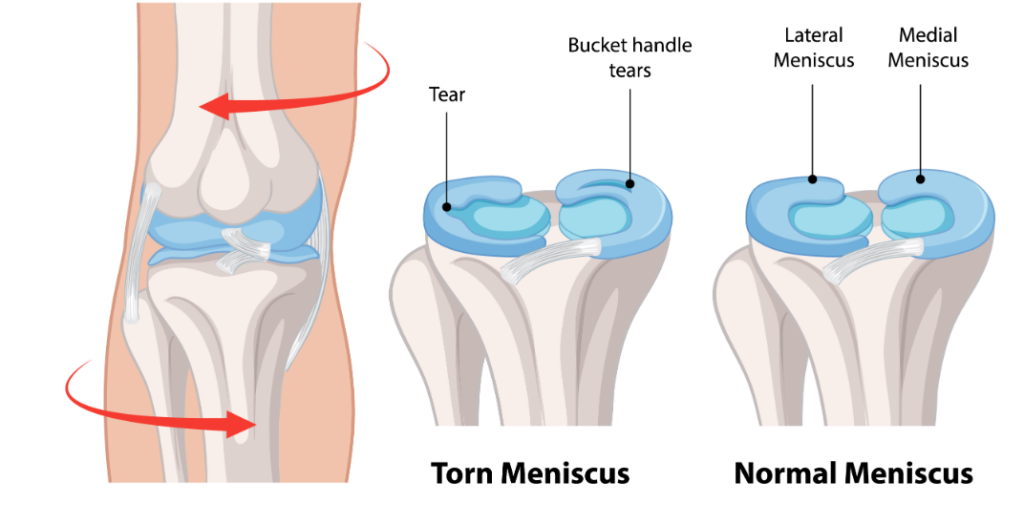
A meniscus tear is a common knee injury. The meniscus is a piece of cartilage in your knee that acts like a cushion. When this cartilage tears, it can cause pain, swelling, and trouble moving your knee. Because knee pain from a meniscus tear can limit daily activities, understanding this injury is important. Early care can help you recover faster and avoid long-term problems.
Causes of Meniscus Tear
Many people get a meniscus tear during sports or physical activities. However, it can also happen from simple movements. For example, twisting your knee while standing up can cause a tear. In older adults, the meniscus can weaken over time. As a result, even small injuries can lead to a tear. Here are some common causes:
Because the meniscus acts as a shock absorber, any forceful movement can put it at risk. According to the American Academy of Orthopaedic Surgeons, meniscus tears are among the most common knee injuries.
Common Symptoms of Meniscus Tear
After a meniscus tear, you may notice pain right away. However, some people feel pain hours later. Often, the knee becomes swollen and stiff. You might also hear a popping sound when the injury happens. Here are typical symptoms:
Because these symptoms can also come from other knee problems, it is important to get a proper diagnosis. If you notice these signs, seek medical advice for orthopedic knee care.
Diagnosis: How Meniscus Tears Are Identified
Doctors use several methods to diagnose a meniscus tear. First, they ask about your symptoms and how the injury happened. Next, they examine your knee for tenderness, swelling, and movement. Often, doctors use special tests to check for a tear. In some cases, imaging tests help confirm the diagnosis. These may include:
Because early diagnosis leads to better treatment for meniscus injury, do not delay seeing a specialist if you have knee pain.
Treatment Options for Meniscus Tear
Treatment for a meniscus tear depends on the size and location of the tear. Your age, activity level, and overall health also matter. Many mild tears heal with simple care. However, some cases need surgery. Here are common treatment options:
Because each person is different, your doctor will suggest the best treatment for your needs. According to the CDC, most people recover well with proper care.
Prevention and Lifestyle Tips
While not all meniscus tears can be prevented, you can lower your risk. For example, keeping your knees strong and flexible helps. Here are some tips:
Because access to orthopedic care may vary by location, find a trusted clinic near you for regular check-ups. Early attention to knee pain can prevent further injury.
Conclusion
In summary, a meniscus tear is a common cause of knee pain. It can result from sports, daily activities, or aging. Early diagnosis and proper treatment for meniscus injury can help you recover and return to normal life. If you have knee pain or suspect a meniscus tear, consult an orthopedic specialist Dr. Hemanth Nandipati for personalized advice on meniscus tear treatment.